
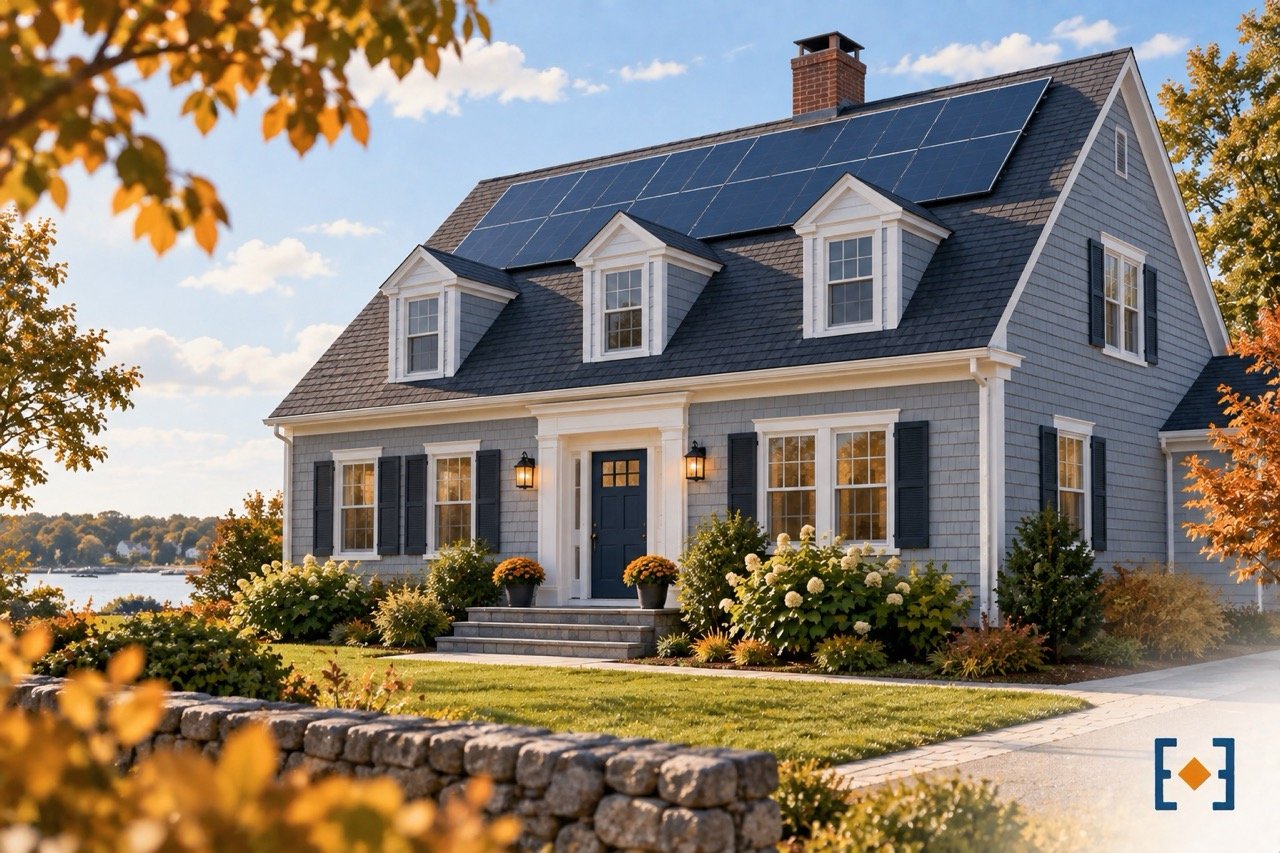
If you own a home in Massachusetts and you are starting to look into solar, this is meant as a starting point: what actually changed for 2026, how the process works, and where to go for the specifics that matter for your own roof and your own budget.
What's changed for 2026
The federal tax credit that used to cover 30 percent of a solar system's cost, Section 25D of the tax code, no longer applies to a system installed in 2026 or later. That is a real change, and it affects the math. What has not changed is that Massachusetts runs its own set of state-level programs, independent of the federal credit: a production incentive called SMART, net metering credits from your utility, and separate state sales, property, and income tax treatment. Those are still active and worth understanding on their own.
How going solar works, and what Massachusetts offers
In broad strokes: an installer assesses your roof and usage, proposes a system size, and handles permitting and interconnection with your utility. Once installed, the installer typically files your SMART application on your behalf, and your utility activates net metering so exported power earns a bill credit. None of this happens automatically the moment panels go on the roof: each step, permitting, utility interconnection, and incentive enrollment, is a real, separate part of the process worth asking a proposed installer to walk you through.
SMART pays a per-kilowatt-hour incentive for production, but only to customers of the state's three investor-owned utilities, Eversource, National Grid, and Unitil. If your town runs its own municipal light plant, SMART does not apply to you, though your utility may offer something separate. Net metering credits excess solar production against your bill at close to the retail rate. Beyond that, Massachusetts exempts solar equipment from sales tax, exempts a system's added value from local property tax for 20 years, and offers its own, smaller state income tax credit. None of this depends on the now-expired federal credit.
Is your home a good candidate, and how do quotes compare
Roof orientation, shading, and condition all affect how well a system performs, and Massachusetts winters add a real seasonal pattern: lower output in the darkest months, with cold temperatures actually helping panel efficiency even as daylight hours shrink. None of that makes solar impractical here. It does mean a credible proposal should be able to explain your home's specific production estimate, not just quote a regional average.
Quotes for what looks like a similar system can vary widely once you account for equipment, financing terms, and how the incentives above are actually represented. A proposal's savings math built around the old federal credit is a proposal describing a different financial picture than a 2026 Massachusetts installation. A battery adds another variable: it can provide backup power during an outage, and it may also qualify for a separate Massachusetts utility program that pays for letting the grid draw on it during summer peak demand. Those are two different benefits, and enrolling in one does not automatically get you the other.
Is solar actually worth it in Massachusetts now?
That depends on your roof, your usage, your financing choice, and the specific proposal in front of you, and no general guide, including this one, can answer it for your particular home. What changed in 2026 is that the answer no longer includes a 30 percent federal credit. What has not changed is that Massachusetts' own state-level programs are real and still worth factoring in. The honest version of this answer comes from a proposal built around your actual roof and your actual utility, not a regional average.
Request your solar quote through SolarSiteIQ to see what a system built for your specific home could look like, and bring the questions above into that conversation.
