
Questions homeowners commonly ask
A handful of concerns come up repeatedly once someone starts seriously researching solar. Some are practical, some are about risk, and a few rest on assumptions worth checking. Here's a direct answer to the ones that come up most often.
Will solar damage my roof?
Risk here comes down to the installation itself: qualified mounting, proper flashing at each roof penetration, and the condition of the roof before panels go on. A system installed correctly by a properly licensed and certified installer, on a roof that was in good shape to begin with, carries meaningfully lower risk than one installed on a roof that already needed work. This is exactly why roof condition assessment matters before installation, not an afterthought. If a roof already needs attention, that's worth addressing first.
Does solar work in winter, or with snow on the panels?
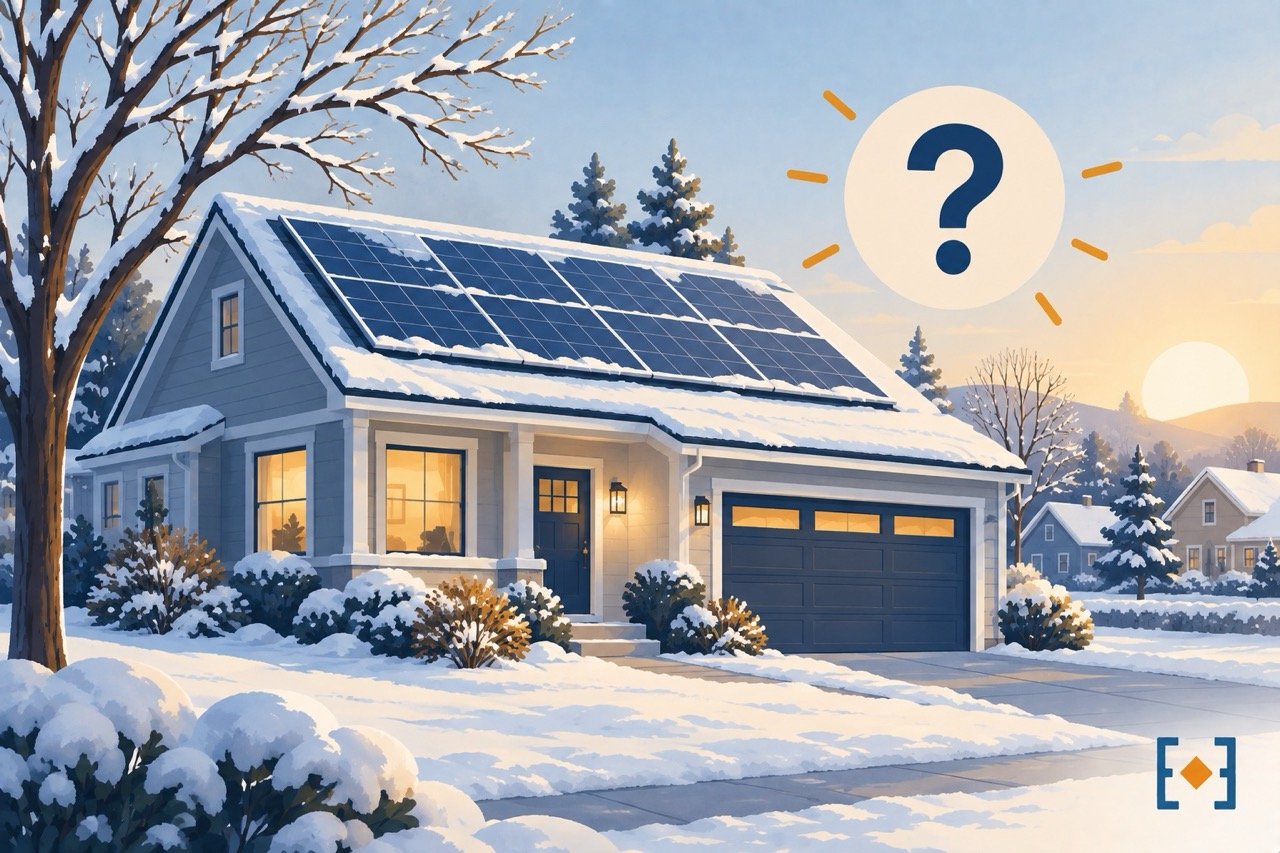
Panels keep producing electricity in cold weather, and temperature actually works in solar's favor: panels can perform somewhat more efficiently in cooler conditions than in extreme heat, according to the Department of Energy. Snow sitting on panels reduces production while it's there. Whether and how quickly it clears depends on the panel's mounting angle, the system's design, outdoor temperature, and the specific snow event, so it varies more than a single rule of thumb can capture. It's a real seasonal factor, not a reason solar doesn't work in Illinois.
Does solar increase my home's resale value?
This is an area where confident-sounding numbers circulate online without solid support behind them. Rather than repeat a percentage this article can't verify for a specific market, the honest answer is that it depends on the local real estate market, whether the system is owned outright versus leased, and buyer expectations in the area. If resale value factors into the decision, a local real estate professional familiar with the specific market is a better source than a general figure from an article.
What maintenance does a system actually need?
Less than most people expect, though "none" isn't quite accurate either. Rain typically clears a meaningful amount of dust and debris on its own, given the angle most systems are installed at, but it doesn't guarantee a fully clean array, and areas with heavy pollen, dust, or bird activity may need occasional attention beyond what rain handles. Periodic visual checks and monitoring production data through the system's app cover most of what's needed day to day. Beyond that, maintenance needs tend to show up around specific equipment reaching the end of its expected life, rather than routine upkeep.
What happens if I move before the system is paid off?
This depends entirely on financing. A system owned outright, whether through cash or a paid-off loan, typically transfers with the home like any other improvement. An active loan, lease, or PPA has its own terms governing what happens at sale, and those terms vary enough between providers that it's worth asking directly before signing, not assuming either way.
Do I need to deal with my HOA?
Possibly, but Illinois law limits what an HOA can actually do here. Under the Homeowners' Energy Policy Statement Act, an Illinois HOA cannot prohibit solar installation outright. It may have a say in where on a roof face the system goes, but it can't block installation on every roof face, and any configuration it requires can't reduce the system's production by more than 10 percent. HOAs are also required to process a solar installation request within a defined timeframe. Municipal permitting is a separate matter: many municipalities require a permit, and confirming who handles that, the installer or the homeowner, is worth settling in writing before the project starts rather than assuming it's automatically included.
Is solar worth it if I don't plan to stay in the home long-term?
That depends on the specific payback timeline, the financing structure chosen, and how transferable the particular agreement is at sale. It isn't a universal yes or no.
Where to get an answer specific to your home
Most of these questions genuinely depend on the specific home, system, and financing choice involved, which isn't a dodge, it's the honest shape of the topic. A conversation with a participating installer, looking at the actual roof, utility, and plans, turns a general answer into a specific one.
Request your solar quote through SolarSiteIQ to get these questions answered with your actual home in mind.
Frequently asked questions
Is solar worth it in Illinois in 2026?
It depends on the specific home, usage, and financing choice, especially now that the federal tax credit no longer applies. There's no universal answer that fits every household.
Do solar panels really work in Illinois winters?
Yes. Cold weather doesn't stop production, and panels can perform somewhat more efficiently in cooler temperatures, though snow cover temporarily reduces output while it's on the panels.
Can my HOA block me from installing solar?
Not outright. Illinois law prevents HOAs from prohibiting solar installations, though an HOA can have some say in roof-face placement within limits set by that same law.
