
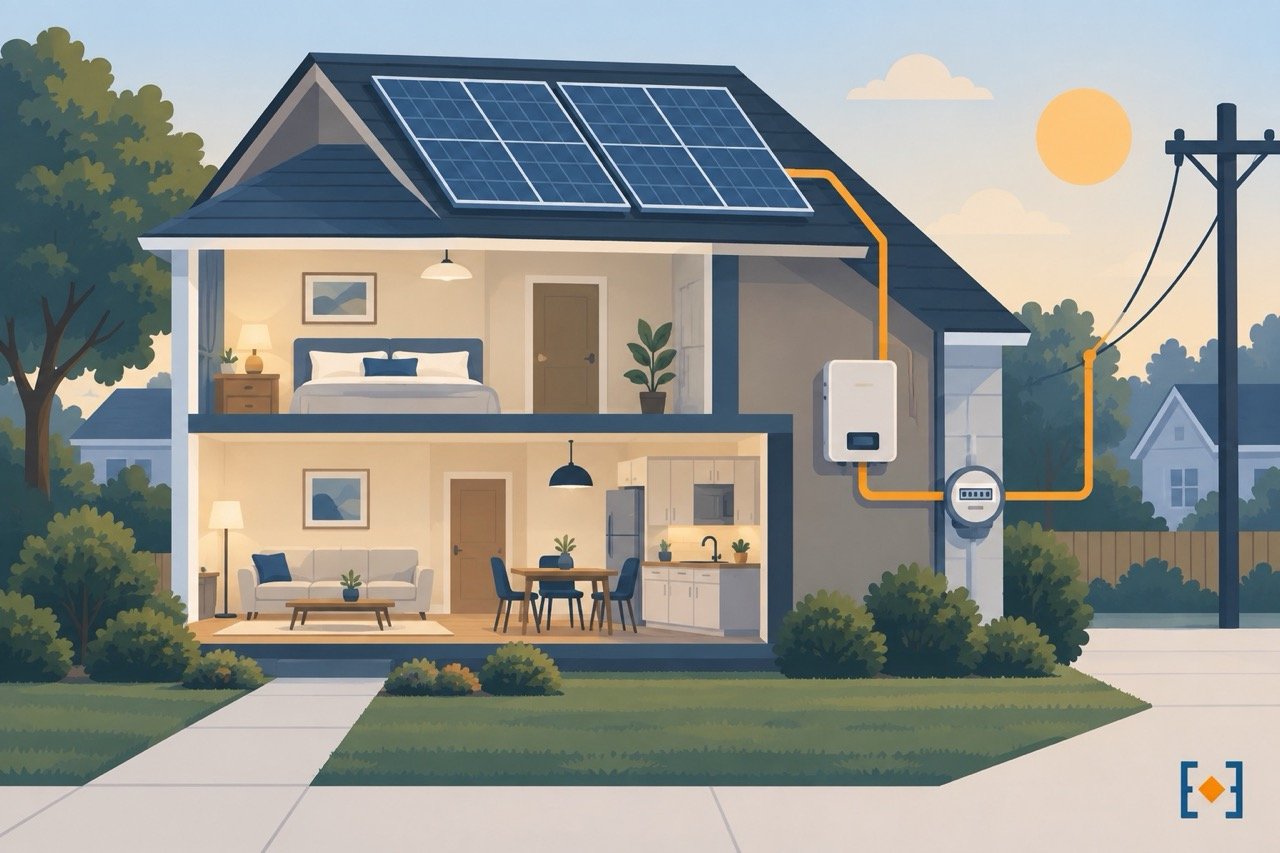
Sunlight in, usable power out
A solar panel converts sunlight into electricity. Everything else attached to a home solar system, the inverter, the meter, the wiring, exists to take that raw electricity and turn it into something a house can use and a utility can measure. Once those pieces make sense, the rest of the solar conversation, incentives, financing, choosing an installer, gets a lot easier to follow.
What’s on the roof
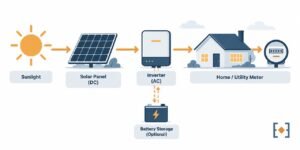
A residential solar panel is built from photovoltaic cells, usually silicon, that generate a small electrical current when sunlight hits them. The Department of Energy’s explanation of how solar works covers the underlying physics in more depth than this article needs. String enough cells into a panel, and enough panels into an array, and you have a system capable of producing a meaningful share of a home’s electricity during daylight hours.
Panels alone don’t produce power a house can use directly. They generate direct current, DC. A home runs on alternating current, AC. Bridging that gap is the inverter’s job.
What the inverter is doing
The inverter converts DC power from the panels into the AC power household outlets and appliances use. Some systems run one central inverter for the whole array. Others use microinverters or power optimizers attached to individual panels, which limit how much a shaded or underperforming panel drags down the rest of the array, compared to a single central inverter where one panel’s output can pull the whole string down more. Neither approach eliminates the effect of shade on the panel that’s actually shaded. It’s a difference in how much that shade spreads to the rest of the system.
Most current inverters also handle monitoring, feeding production data to an app so you can see how the system is performing across seasons instead of taking it on faith.
Nighttime and low-sun days
Without a battery, a home draws power from the grid at night and during low-sun stretches, the same as before solar was installed. A grid-tied system isn’t built to make a house energy-independent. It’s built to offset how much grid electricity a home draws over time, mostly during the hours it’s actually producing.
When a system produces more than the home is using at that moment, the surplus typically flows out to the grid. What that surplus is worth depends on the utility and the specific net metering or net billing arrangement tied to the account, which differs by Illinois utility and by when the system was interconnected.
Where a battery comes in
A battery stores surplus production for later use instead of sending it to the grid immediately. Whether it’s worth adding depends on the goal: some households want backup power during outages, some want to use more of their own production instead of exporting it, some want both. A battery adds cost, and it’s not required for a grid-tied solar system to function. One important detail worth knowing before assuming a battery means the lights stay on in an outage: backup capability isn’t automatic. It depends on the system being specifically designed and configured for backup operation, since not every battery installation is wired that way.
What the meter is actually tracking
A utility meter records electricity flowing in both directions: what a home pulls from the grid and what it sends back. That record is what determines a bill under whatever net metering or net billing arrangement applies to the account. It’s the piece that turns a system’s production into a financial outcome instead of just a technical one.
Whether a specific roof is a good candidate
That depends on details this kind of overview can’t settle: roof age, orientation, shading, electrical panel condition, and usage patterns. A real site assessment looks at all of that directly.
Request your solar quote through SolarSiteIQ to have a participating installer walk your roof and work through the specifics.
Frequently asked questions
Do solar panels work on cloudy days?
Yes, at reduced output compared to a clear day. Production drops, it doesn’t stop.
Do I need a battery for solar to make sense?
No. A grid-tied system works without one. A battery adds cost and, when configured for it, backup capability, but it isn’t required for the system to function or offset electricity use.
How long does an inverter last compared to the panels?
Inverters commonly have shorter expected lifespans than panels and may need replacement sooner, depending on type and manufacturer. Ask any installer directly about the specific equipment they’re proposing.
