
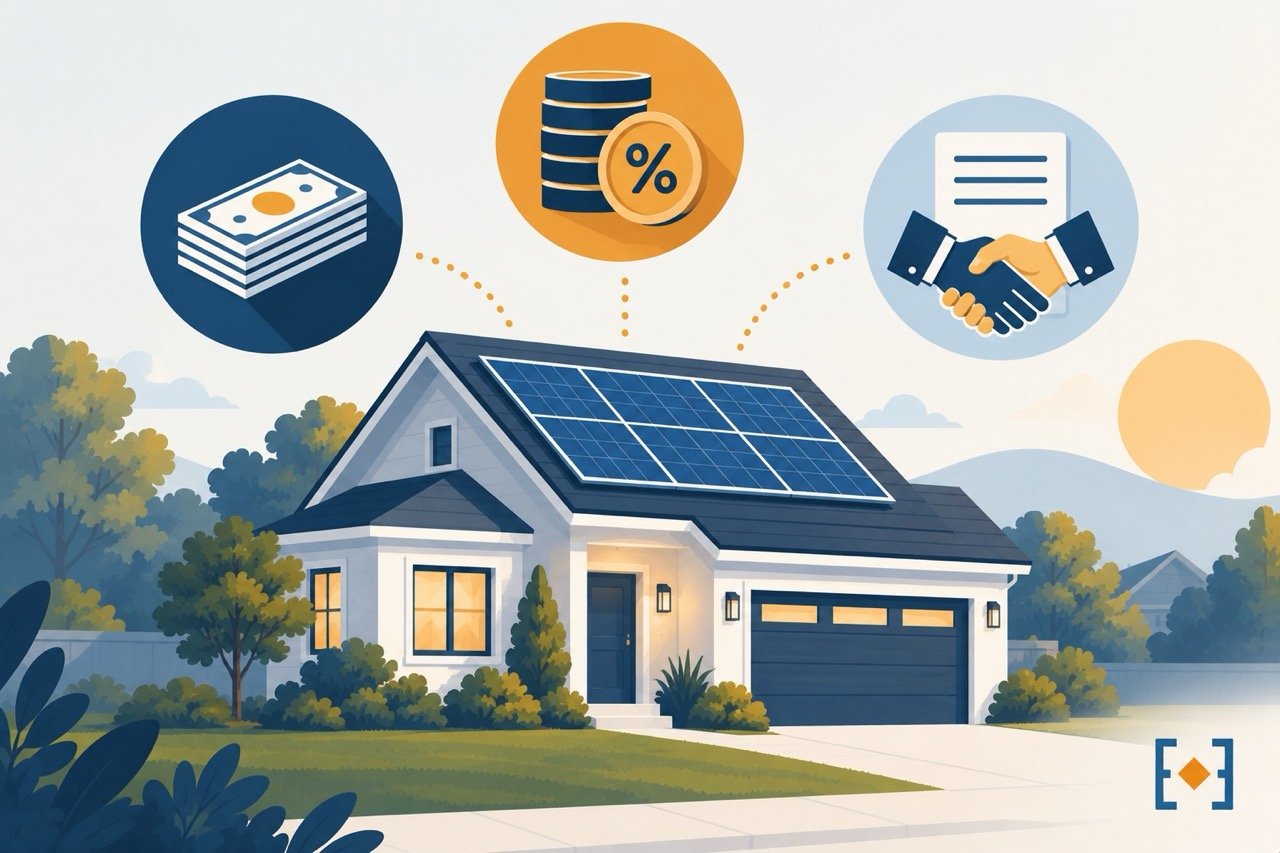
Two separate decisions
Deciding solar makes sense for a home is one decision. Deciding how to pay for it is a separate one, and the two get treated as a package more than they should. This isn’t financial advice, and SolarSiteIQ doesn’t provide financing itself. What follows is a plain explanation of the structures Illinois homeowners commonly encounter, so the questions to ask a specific installer or lender make more sense.
Cash purchase
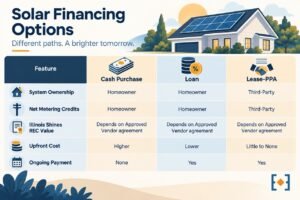
Paying upfront means owning the system outright from day one, with no lender involved. It’s the simplest structure on paper. Net metering credits go to the account holder, so ownership settles that question cleanly. Illinois Shines REC value is a separate matter regardless of how the system was paid for: that value is contracted through an Approved Vendor as part of the installation, and how it reaches you depends on that vendor agreement, not simply on owning the system outright. The tradeoff for paying cash is the upfront cost itself.
Solar loans
A loan spreads the cost out over time instead of requiring it upfront, and ownership stays with the homeowner. Loan structures vary more than a simple secured-versus-unsecured split suggests. Some are secured against the home, some aren’t, and rates and terms differ by lender and by the specific loan product, not just by that one distinction.
There’s a detail worth knowing about specifically because a federal regulator flagged it directly: the Consumer Financial Protection Bureau’s 2024 review of solar financing found that some solar loans include a “dealer fee,” commonly ranging from 10 to 30 percent of the cash price, folded into the loan’s principal rather than disclosed separately. That means the loan amount can be meaningfully higher than the cash price of the system, in a way that isn’t always obvious from the advertised rate. Ask directly whether a quoted loan includes a dealer fee, and ask to see the cash price separately from the financed amount before comparing offers.
“$0 down” is a common pitch, and it isn’t automatically good or bad. It just means no upfront cash is required. What actually determines whether an offer is reasonable is the total amount financed, including any dealer fee, and the interest rate over the life of the loan, not the size of the down payment.
Leases and power purchase agreements
With a solar lease, a third party owns the system installed on the roof, and the homeowner pays a fixed monthly fee for the electricity it produces. A power purchase agreement, or PPA, works similarly but charges a per-kilowatt-hour rate instead of a flat fee. Availability and terms for these structures vary by company and aren’t offered by every installer. In both cases, the third-party owner, not the homeowner, typically holds the incentive value like Illinois Shines RECs.
Ownership also affects more than incentives. It affects who handles maintenance, what happens if the home sells before the term ends, and whether the agreement includes an escalator clause that increases the payment over time. Ask about all three before signing either type of agreement.
Questions worth asking regardless of structure
- Do I own the system, or does a third party?
- If there’s a loan, does the quoted rate or amount include a dealer fee, and what’s the cash price compared to the financed amount?
- Is there an escalator clause, and if so, what’s the maximum increase over the term?
- What happens if I sell the home before the term ends? Can the agreement transfer to the buyer?
- Who’s responsible for maintenance under this specific structure?
- Is there a penalty for paying off a loan early?
What SolarSiteIQ does and doesn’t do here
SolarSiteIQ doesn’t provide financing and isn’t a lender, and not every installer in the program offers every financing type described above. What SolarSiteIQ does is connect you with a participating installer who can walk through the specific financing options they actually offer.
Request your solar quote through SolarSiteIQ and ask directly what financing structures the installer you’re matched with actually provides.
Frequently asked questions
Is a solar loan better than a lease?
It depends on priorities. A loan means owning the system, along with the loan obligation. A lease or PPA means the third-party owner, not the homeowner, typically holds incentive value like Illinois Shines RECs. Ownership through a loan settles who the utility account and net metering credits belong to, but Illinois Shines REC value still depends on the Approved Vendor agreement either way, not on financing structure alone. Neither loan nor lease is universally better.
What’s a dealer fee, and why does it matter?
It’s a markup some lenders fold into a solar loan’s principal, sometimes 10 to 30 percent of the cash price, that isn’t always clearly disclosed. The CFPB has specifically flagged this practice. Ask to see the cash price and financed amount separately before comparing loan offers.
Does SolarSiteIQ offer financing directly?
No. SolarSiteIQ connects homeowners with participating installers, who present their own financing options directly, and offerings vary by installer.
